Video credit: HMD Tech
Ask ten anglers about the best fish finder, and you may get ten different answers before anyone has even finished tying a lure.
One angler will swear by Garmin. Another will tell you Humminbird is unbeatable. Someone else will explain, with the confidence of a fishing professor, why Lowrance is the only sensible choice.
And then there is the angler who says, “My old fish finder still works fine.”
Fair enough.
But fish finder technology has changed dramatically. Today’s units can combine CHIRP sonar, DownScan or Down Imaging, SideScan, GPS mapping, custom contour maps, Wi-Fi, networking, and even live forward-facing sonar. In 2026, the real question is not simply which fish finder is “best.” It is which fish finder is best for the way you actually fish.
Our updated guide keeps the practical spirit of the original Stories of Water article while bringing the recommendations into 2026. Recent 2026 comparisons continue to place Garmin, Humminbird, and Lowrance at the center of the market, with different strengths in live sonar, imaging, mapping, ease of use, and value.
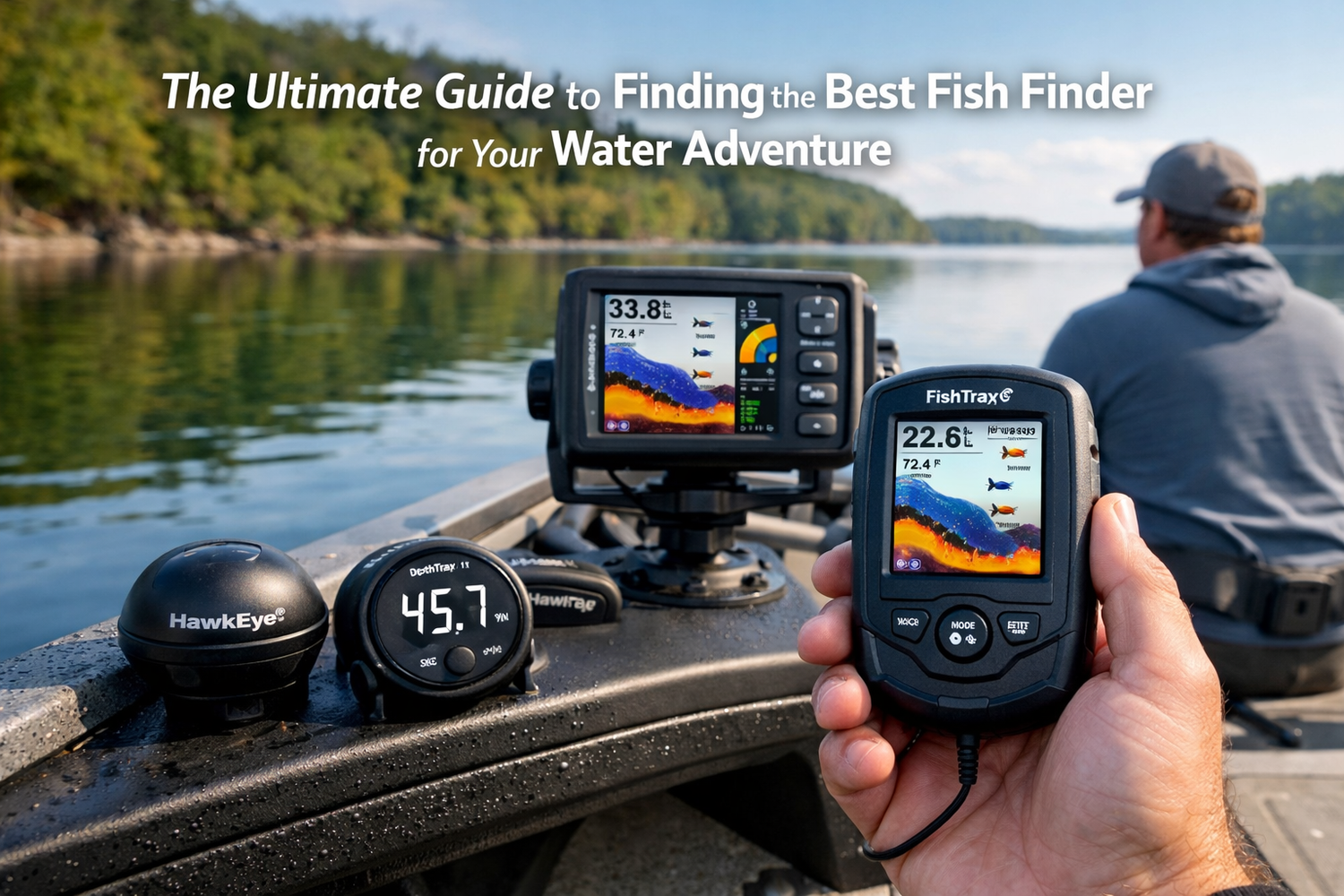
Image credit: HawkEye Electronics
Our Quick Answer: What Is the Best Fish Finder in 2026?
For most anglers who want one versatile unit that can grow with their fishing, a 7-inch fish finder with GPS, CHIRP, detailed mapping, and side/down scanning is the sweet spot.
Our top categories for 2026 look like this:
- Best overall for many anglers: Garmin ECHOMAP UHD2 7-inch class
- Best value: Garmin STRIKER Vivid series
- Best for side and down imaging: Humminbird HELIX 7 series
- Best value with broad scanning: Lowrance Eagle 7 TripleShot
- Best premium live sonar ecosystem: Garmin LiveScope-compatible setup
- Best high-resolution marine option: Raymarine Element HV
These are not “one brand wins everything” picks. In fact, a recent 2026 comparison found that Garmin, Humminbird, and Lowrance are all highly capable, with the major differences coming down to imaging style, mapping ecosystem, software, and live-sonar compatibility.
What Exactly Does a Fish Finder Do?
A fish finder sends sound waves into the water through a transducer. Those sound pulses bounce off fish, vegetation, rocks, the bottom, and other objects. The unit then turns those echoes into the colorful images you see on the screen.
It sounds like science fiction.
Fortunately, you don’t need to be a sonar engineer to use one.
At the basic level, a fish finder helps answer three questions:
- How deep is the water?
- What’s down there?
- Where should I spend my fishing time?
The more advanced the unit, the more detailed those answers become.
A basic sonar screen may show depth and fish arches. A modern imaging unit can show underwater trees, rock piles, drop-offs, vegetation, channels, and fish-holding structure. With live sonar, you can watch targets move in real time.
That’s a pretty big leap from staring at an empty piece of water and whispering, “Come on, fish.”
The 7 Features That Matter Most in a 2026 Fish Finder
1. CHIRP Sonar
CHIRP sonar is still one of the most useful features to prioritize.
Instead of relying on a single frequency, CHIRP sends a range of frequencies over time. The result can be better target separation and more useful detail, particularly when fish are close to the bottom or close together.
For a beginner, CHIRP is one of those features you may not appreciate on day one.
After a few trips, you’ll wonder how you lived without it.
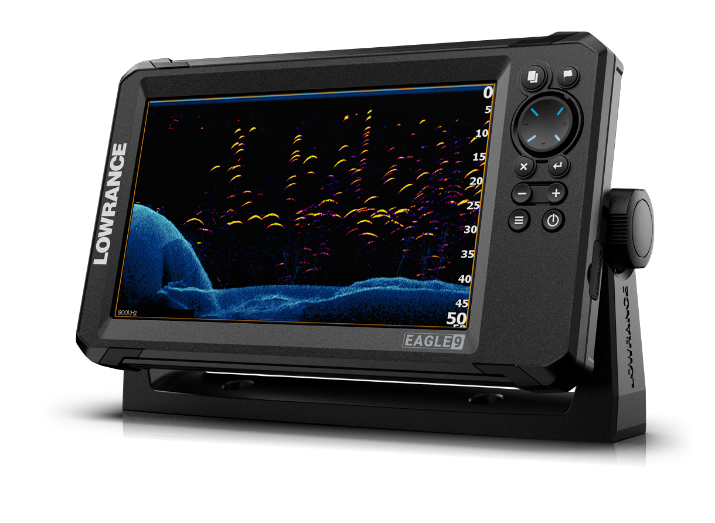
Image credit: Lowrance
2. Down Imaging and DownScan
Traditional sonar is excellent for finding depth, fish, and general structure. Down-imaging technologies can make underwater objects easier to interpret.
Lowrance calls its technology DownScan Imaging, while Humminbird uses Down Imaging.
The goal is similar: help you understand what’s below the boat with greater visual detail.
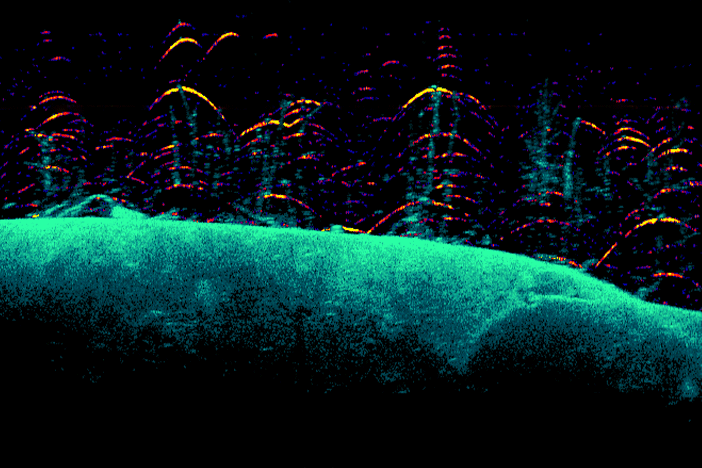
Image credit: Lowrance
3. Side Imaging or SideScan
Side imaging can be a game changer when you’re trying to cover water.
Instead of looking only directly below the boat, side-scanning sonar can show structure to the left and right. That makes it useful for finding brush, rock, drop-offs, submerged objects, and potential fish-holding areas without driving directly over everything.
Lowrance’s Eagle 7 TripleShot HD, for example, combines CHIRP, DownScan, and SideScan in its TripleShot HD transducer, while the company’s current Eagle lineup also includes FishReveal technology and autotuning.
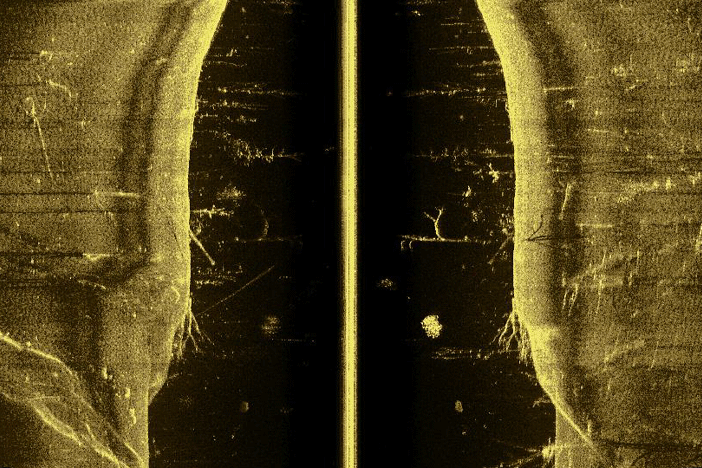
Image credit: Lowrance
4. GPS and Mapping
A fish finder with GPS can become much more than a sonar screen.
You can mark productive spots, save waypoints, retrace tracks, and use depth contours to understand how a lake or coastal area is shaped.
That means the best fish finder for you may not be the one with the prettiest sonar picture. A strong mapping system can save you hours of searching on every future trip.
And if you are fishing unfamiliar water, that can be worth its weight in tackle boxes.
5. Screen Size
Do you really need a giant 12-inch display?
Probably not if you’re sitting in a tiny kayak.
On the other hand, a larger boat with multiple sonar views can benefit enormously from a bigger screen.
For many anglers, 7 inches is the sweet spot. It offers enough room for split-screen sonar and mapping without turning a small console into a miniature movie theater.
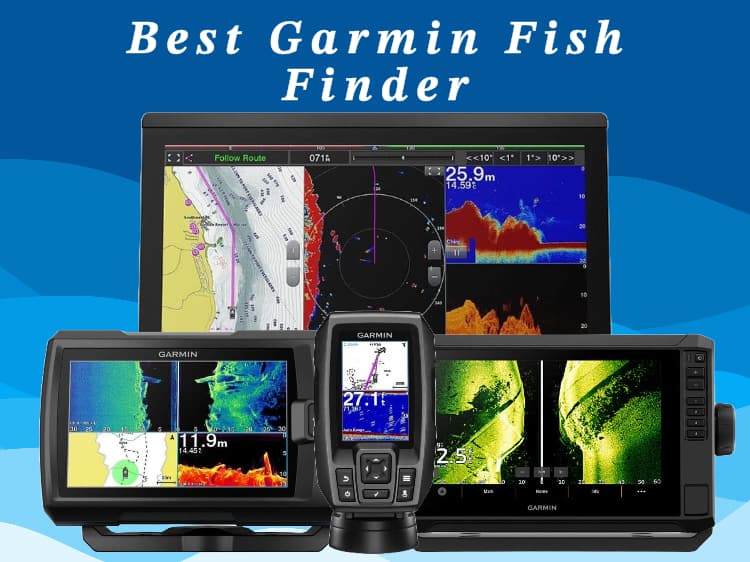
Image credit: The Idaho Fisherman
6. Live Sonar
This is where the technology gets seriously interesting.
Live sonar lets you see fish and structure in near real time rather than relying only on historical sonar scrolling across the screen.
Garmin LiveScope, Lowrance ActiveTarget, and Humminbird MEGA Live are among the major systems in this space.
The catch?
Live sonar is not simply a fish finder feature you magically unlock with a software update. It typically requires compatible hardware, transducers, and sometimes additional network components.
So decide whether live sonar matters to you before buying your first unit.
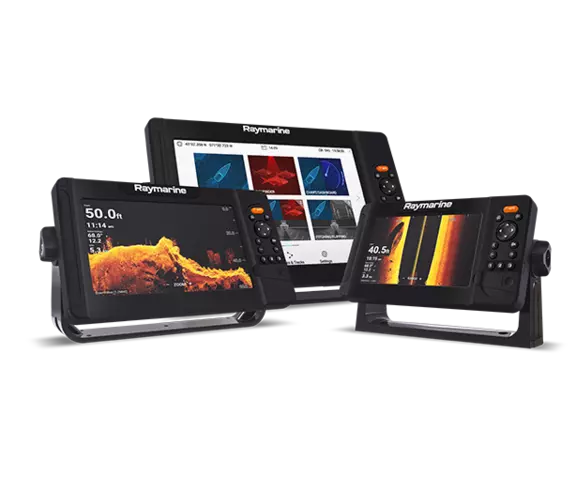
Image credit: Raymarine
7. Ease of Use
This feature gets ignored far too often.
You can buy a $2,000 fish finder with an astonishing list of features. But if you spend half the trip searching through menus, you’ve purchased a very expensive electronic box of frustration.
Look for a control system that feels comfortable with wet hands, sunglasses, glare, and a moving boat.
The best fish finder is the one you’ll actually use properly.
Best Fish Finder for Most Anglers: Garmin ECHOMAP UHD2
The Garmin ECHOMAP UHD2 is a strong choice for anglers who want to combine sonar, mapping, and future upgrade potential.
The current UHD2 SV family is available in 6-, 7-, and 9-inch sizes. Garmin lists traditional CHIRP, ClearVü, and SideVü sonar options, built-in networking, Wi-Fi, and compatibility with LiveScope systems. The 7-inch class also uses a touchscreen with keyed assist, giving you a useful combination of modern touch controls and physical buttons.
For someone building a fishing system rather than simply buying a depth finder, that’s a big advantage.
Check Garmin’s current ECHOMAP UHD2 specifications.
Garmin’s official 2026 guidance also positions ECHOMAP alongside STRIKER and GPSMAP as part of its broader marine fish-finder and chartplotter lineup.

Image credit: Academy Sports + Outdoors / Garmin
Best Budget Fish Finder: Garmin STRIKER Vivid
Not everyone needs a fancy chartplotter with enough features to launch a satellite.
Sometimes you just want to find depth, see fish, mark spots, and get on with fishing.
That’s where the Garmin STRIKER Vivid range makes a lot of sense.
The STRIKER Vivid 7sv offers a 7-inch display, traditional CHIRP sonar, ClearVü scanning sonar, built-in GPS, Quickdraw Contours support, and a keyed interface. Garmin’s specifications list a 7-inch, 800 × 480 display and 500 W RMS sonar transmit power for the relevant sonar features.
Recent 2026 buying guides also continue to position the STRIKER Vivid family as a strong value choice, particularly for anglers who want useful sonar and GPS without jumping immediately into premium networking or live-sonar territory.
The original Stories of Water article focused heavily on affordable fish finders, and the STRIKER line remains relevant because it keeps that same basic philosophy: useful technology without requiring a second mortgage.

Image credit: Sea-Run Fly & Tackle
Best Fish Finder for Side Imaging: Humminbird HELIX 7
Humminbird remains especially interesting for anglers who care about imaging and freshwater mapping.
The current HELIX 7 family offers multiple configurations, including models with Dual Spectrum CHIRP, Down Imaging, Side Imaging, internal GPS, and mapping.
The HELIX 7 SI GPS G4, for example, has a 7-inch display with a 1024 × 600 pixel matrix, built-in GPS, built-in mapping, Dual Spectrum CHIRP, Down Imaging, and Side Imaging.
For anglers who spend lots of time scanning banks, points, submerged trees, and other structure, that side-looking perspective can be incredibly useful.
Humminbird’s software ecosystem is also worth considering because your choice of fish finder is increasingly a choice of mapping and networking ecosystem as well.
And yes, the fish do not care which brand you purchased. Your wallet might.

Image credit: FishUSA / Humminbird
Best Value With SideScan: Lowrance Eagle 7 TripleShot HD
The Lowrance Eagle 7 TripleShot HD is another excellent middle-ground option.
Lowrance says the Eagle 7 with TripleShot HD combines wide-angle high CHIRP sonar, DownScan Imaging, and SideScan. It also includes FishReveal technology, autotuning sonar, an IPS display, and a worldwide basemap on the U.S. model.
That combination makes the Eagle 7 attractive for anglers who want a lot of scanning ability without immediately moving into the flagship HDS range.
The current Lowrance page lists a $599.99 price for the U.S. Eagle 7 TripleShot model, although actual retail pricing and availability can change.
See the current Lowrance Eagle 7 specifications.
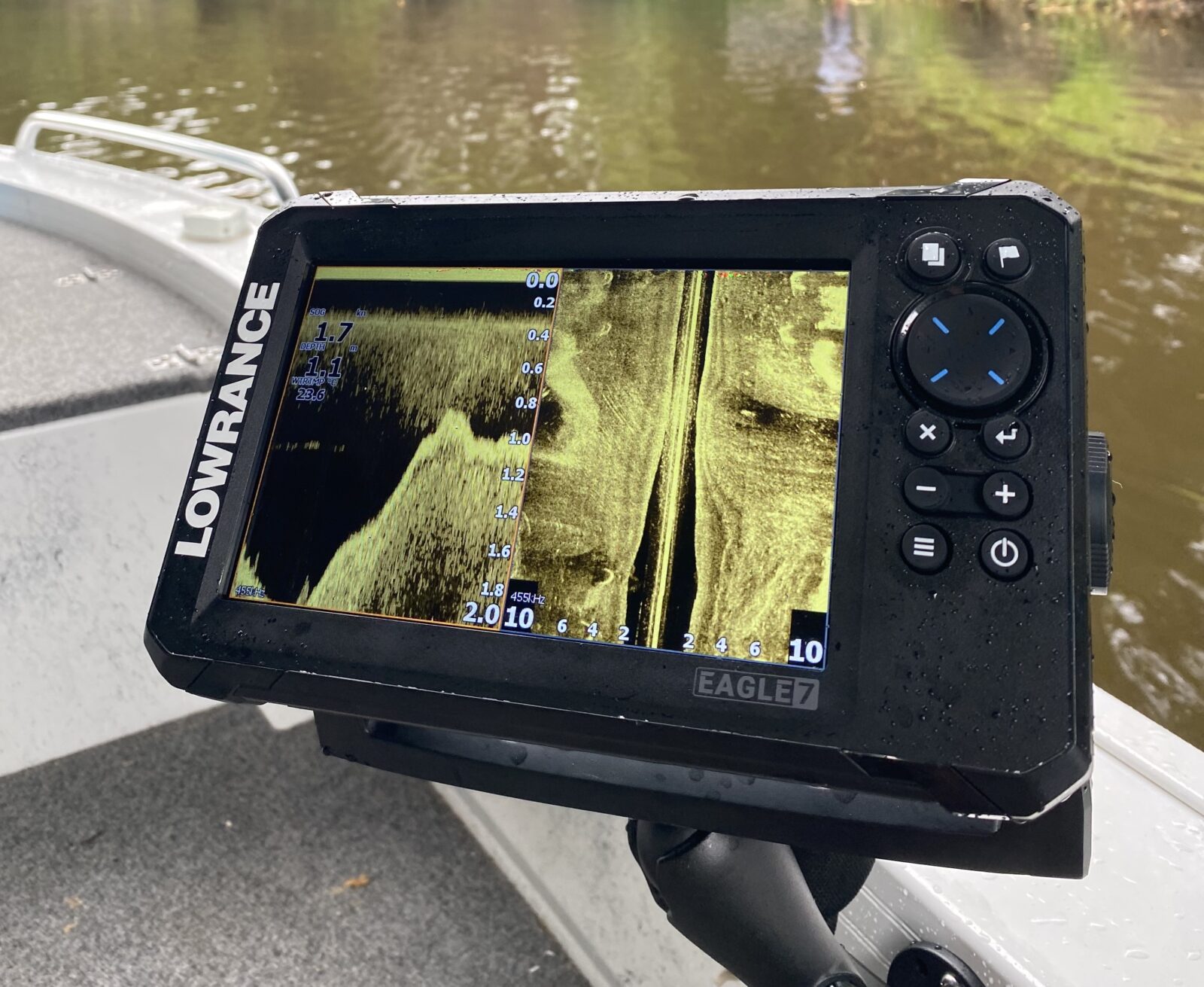
Image credit: Fishing World Australia
Best Premium Fish Finder: Lowrance HDS PRO
Now we enter serious-money territory.
The Lowrance HDS PRO is aimed at anglers who want a full-featured marine electronics system rather than a simple fish finder.
It is designed for high-end fishing boats and integrates advanced sonar, charting, networking, and optional live-sonar technology.
For someone who fishes tournaments, covers large bodies of water, or simply enjoys having every possible tool at the helm, this type of system makes sense.
For the casual angler who fishes three weekends a summer?
Probably overkill.
That’s an important point throughout this guide: more features do not automatically mean more fish.
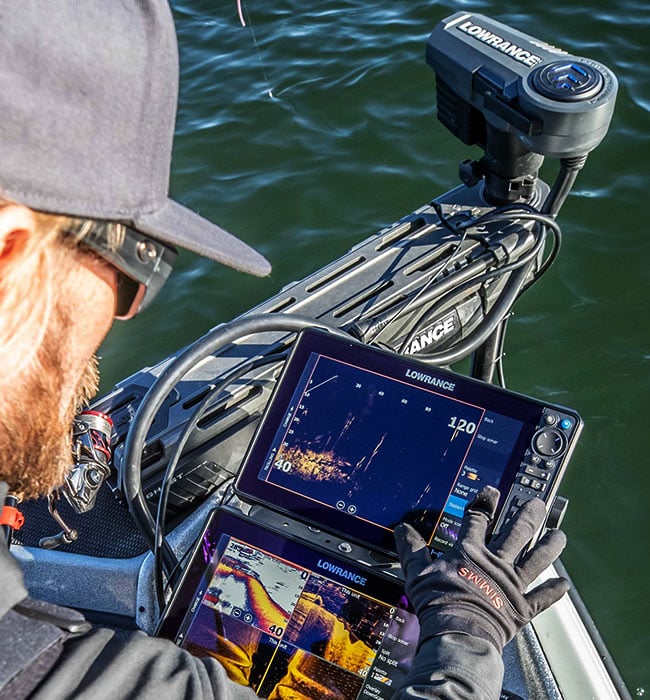
Image credit: Bass Boat Europe
Best Fish Finder for Live Sonar: Garmin LiveScope
If live sonar is at the top of your wish list, Garmin deserves serious consideration.
LiveScope is an ecosystem rather than a standalone screen. A compatible Garmin display works with the appropriate LiveScope hardware, allowing anglers to view live-scanning sonar in multiple orientations depending on the system and setup.
Current Garmin ECHOMAP UHD2 models support LiveScope, while dedicated LiveScope packages commonly use the GLS 10 sonar module and compatible transducers.
This is the part where fish finders stop looking like depth meters and start looking like underwater cameras.
They are not actual cameras, of course. The display is showing sonar returns. But once you’ve watched a fish move toward your lure on live sonar, ordinary sonar can suddenly feel a little old-school.
For anglers who specifically want forward-facing sonar, it’s also smart to compare Garmin with Lowrance ActiveTarget and Humminbird MEGA Live before buying.
Best Fish Finder for Saltwater: Raymarine Element HV
Saltwater anglers often have different priorities from someone fishing a small inland lake.
You may care more about charting, bottom tracking, coastal navigation, structure, and deeper-water performance.
The Raymarine Element HV is available in 7-, 9-, and 12-inch display sizes and uses HyperVision CHIRP technology for high-resolution DownVision, SideVision, and RealVision 3D imaging. Raymarine also lists built-in GPS/GNSS, RealBathy mapping, and support for LightHouse, Navionics, and C-MAP charts.
See Raymarine Element HV features and current models.
For coastal anglers who want fish finding and navigation in one system, it is a compelling alternative to the better-known freshwater-focused options.
Best Fish Finder for Kayak Fishing in 2026
Kayak fishing changes the buying equation completely.
You’ve got limited space. Limited battery capacity. Limited mounting room. And approximately zero interest in installing an electronics system that looks like the cockpit of a submarine.
A compact 4- or 5-inch fish finder can be enough for many kayak anglers.
The Garmin STRIKER Vivid 4cv is a logical value option, while larger 7-inch units can make sense if your kayak has room and you want better split-screen visibility.
Lowrance’s Eagle family also includes compact options, with 4-, 5-, 7-, and 9-inch screens depending on configuration. Lowrance specifically describes its smaller Eagle models as suitable for kayaks and small fishing boats.

Image credit: SVB
For more fishing preparation ideas, check out the Stories of Water guide on how to properly cast a fishing rod. A fantastic fish finder cannot compensate for a lure that never reaches the productive area.
Best Fish Finder for Freshwater Fishing
Freshwater anglers are spoiled for choice.
Bass, crappie, walleye, perch, trout, catfish, and other species can all benefit from different combinations of sonar and mapping.
For structure-focused bass fishing, side imaging is especially useful. For vertical fishing, strong traditional CHIRP and detailed target separation may be more important.
If you regularly target perch, the Stories of Water complete perch fishing guide is a useful companion because understanding fish behavior is just as important as seeing them on a screen.
A fish finder tells you what’s happening underwater.
You still have to figure out why it is happening.
What Is the Best Cheap Fish Finder?
“Cheap” can be dangerous terminology in the fish-finder world.
A $100–$200 unit may be exactly what you need—or a frustrating first step toward buying another fish finder six months later.
For simple depth and basic sonar, an entry-level Garmin STRIKER model can make a lot of sense. 2026 buying guides continue to place the STRIKER 4 and STRIKER Vivid 4cv among the most affordable useful fish-finder choices.
But remember to budget for the full system.
You may need:
- Transducer
- Battery or power connection
- Mounting hardware
- Protective cover
- Chart card, depending on the model
- Compatible networking accessories for future upgrades
The $150 fish finder can become a $300 project surprisingly quickly.
Do You Really Need GPS on a Fish Finder?
Our answer is yes for many anglers.
GPS transforms a fish finder from a simple sonar device into a useful fishing-navigation tool.
When you catch three bass around the same submerged point, why rely on memory?
Mark it.
When you find a productive drop-off, mark it.
When you accidentally discover a great fishing spot while exploring?
Definitely mark it.
That is why GPS is one of the features we would prioritize ahead of some flashy extras.
For timing your trips around conditions, the Stories of Water guide to the best time to go fishing is also worth reading. Sonar can help you locate structure, but timing still influences how fish behave.
Can a Fish Finder Actually Find Fish?
Yes—but this is another area where expectations matter.
A fish finder does not point at a fish and shout, “There he is!”
Modern units can display likely fish targets, but interpreting sonar takes practice. A fish arch can look different depending on boat speed, fish movement, cone angle, depth, sensitivity, and the way the target moves through the sonar beam.
That’s why learning your particular unit is so valuable.
You can spend more money on technology, but understanding the screen is what turns technology into an advantage.
The Stories of Water carp fishing guide is a good reminder of this broader principle: equipment matters, but understanding where and how fish behave matters too.
How to Read a Fish Finder Like a Pro
Don’t start by obsessing over every tiny blob.
Start with the bottom.
Ask:
- Is it flat?
- Is it dropping quickly?
- Is there a ledge?
- Is there vegetation?
- Is there hard bottom?
- Are fish suspended or close to structure?
Then look for patterns.
One fish mark is interesting.
Five similar marks around the same contour are much more interesting.
This is where modern side imaging becomes so useful. Instead of searching randomly, you can scan larger areas, locate promising structure, mark it, and return to fish it more thoroughly.
Image credit: Lowrance
Fish Finder vs Depth Finder: Are They the Same?
Not exactly.
A traditional depth finder may focus mainly on showing water depth and bottom information. A modern fish finder can provide far more: fish targets, structure, GPS, mapping, temperature, speed, tracks, waypoints, and imaging.
Today’s units are often really fish finder + GPS chartplotter + sonar imaging system in one package.
That’s why older articles can feel confusing when you’re shopping in 2026. Technology that used to belong to expensive equipment has gradually moved into more affordable units.
What Fish Finder Brand Is Best in 2026?
There is no universal winner.
Choose Garmin if:
You value ease of use, GPS, mapping, and the LiveScope ecosystem. Garmin’s current lineup stretches from affordable STRIKER units to sophisticated ECHOMAP and GPSMAP systems.
Choose Humminbird if:
You care heavily about freshwater mapping, MEGA imaging, side imaging, and integration with the One-Boat Network. The HELIX 7 family remains an important part of that ecosystem.
Choose Lowrance if:
You want strong imaging, C-MAP charting, FishReveal, and a clear path from affordable Eagle units toward more advanced HDS systems.
Choose Raymarine if:
You are especially interested in high-resolution coastal sonar, navigation, and RealVision 3D/HyperVision capabilities.
Don’t Buy More Fish Finder Than You Can Actually Use
This might be the most valuable tip in the article.
Before spending $2,000 or more, ask yourself what you actually need.
If you mainly fish local lakes from a small boat, a quality 7-inch CHIRP/GPS fish finder may be all you ever need.
If you fish tournaments every weekend and want live sonar, detailed mapping, multiple displays, networking, and advanced trolling-motor integration, the premium route makes more sense.
The right unit is not the one with the longest specification sheet.
It is the one that solves your fishing problems.
What About Portable and Castable Fish Finders?
Portable sonar has improved enormously.
For bank fishing, small boats, ice fishing, or anglers who move between several watercraft, a portable or castable unit can be incredibly convenient.
The beauty is simple: no permanent installation.
That can be worth far more than another feature you’ll never touch.
You can also combine a fish finder with better knowledge of your target species. Stories of Water has guides on what catfish like to eat, the best bait for bluegill, and how to catch grass carp.
That’s an important reminder: electronics show you the underwater world, but fishing knowledge tells you what to do with the information.
5 Common Fish Finder Buying Mistakes
Mistake 1: Buying Based Only on Screen Size
A giant display looks fantastic in a showroom. Make sure it actually fits your boat.
Mistake 2: Ignoring the Transducer
The display gets all the attention, but the transducer is doing the actual underwater listening. Don’t build a premium system around an unsuitable transducer.
Mistake 3: Forgetting the Mapping Ecosystem
Mapping software can influence the entire experience. Think about Garmin/Navionics, C-MAP, or Humminbird’s mapping options before committing to a platform.
Mistake 4: Assuming Expensive Means Easy
More options can mean more menus.
Mistake 5: Never Learning the Settings
Take time to understand sensitivity, range, frequency, gain, chart overlays, and imaging modes.
It is much better to master a $500 fish finder than barely understand a $2,000 one.
How Much Should You Spend on a Fish Finder in 2026?
Recent 2026 buying guides place useful budget models around the low hundreds, strong mid-range systems around the $500–$900 area, and premium live-sonar or large-screen systems well above $1,000. One current comparison lists examples such as the Garmin STRIKER Vivid 4cv around $150, Garmin ECHOMAP UHD2 73cv around $500, Humminbird HELIX 7 around $600, and Garmin LiveScope Plus around $1,500, although real-world retail prices vary by bundle, transducer, retailer, and region.
For most recreational anglers, the $300–$800 range is where the value becomes especially interesting.
That’s enough budget to get useful sonar, GPS, mapping, and imaging without jumping directly into flagship electronics.
What Is the Best Fish Finder for the Money?
If we were building a practical 2026 shortlist for different budgets, we’d approach it this way:
- Under $200: Garmin STRIKER Vivid 4-class units for straightforward sonar and GPS.
- $300–$600: Garmin ECHOMAP UHD2 or Lowrance Eagle depending on your preferred ecosystem and imaging needs.
- $500–$900: Humminbird HELIX 7 or a stronger Eagle/ECHOMAP configuration with side imaging.
- $1,000+: Start looking at larger screens, better mapping, networking, and live-sonar compatibility.
- $1,500+: Build around live sonar if that is genuinely important to your fishing style.
For beginners, we’d rather see someone buy a quality mid-range unit and learn it properly than spend wildly on technology they barely use.
Final Verdict: What Is the Best Fish Finder in 2026?
So, what is the best fish finder in 2026?
For the largest group of anglers, a good 7-inch GPS fish finder with CHIRP and modern scanning sonar is still the smartest starting point. Garmin ECHOMAP UHD2 sits near the top of our all-around list because it combines sonar, mapping, a useful screen size, networking, and a path toward LiveScope.
For value, the Garmin STRIKER Vivid family remains difficult to ignore.
For freshwater anglers who love detailed imaging, the Humminbird HELIX 7 deserves serious attention.
For strong scanning value, the Lowrance Eagle 7 TripleShot HD is compelling.
For serious live-sonar enthusiasts, Garmin LiveScope remains one of the biggest names in the category.
And for anglers who spend more time offshore or in coastal waters, Raymarine Element HV brings impressive sonar and chartplotting capabilities.
The original Stories of Water article was right about one important thing: there is no single fish finder that is perfect for everyone. The best choice depends on your boat, fishing style, target species, water depth, budget, and the features you will actually use.
Before buying, ask yourself one simple question:
“What do I want my fish finder to help me do?”
Find depth?
Find structure?
Map a lake?
Search a huge area?
Watch fish move in real time?
Once you answer that, the right fish finder becomes much easier to spot.
And when you finally find that perfect screen, remember: the fish still have the last move.
Fortunately, that is what makes fishing fun.
More Fishing Guides From Stories of Water
Once your electronics are sorted, improve the rest of your fishing setup with the guide to keeping minnows alive, the guide to hooking shrimp like a pro, and five easy ways to catch mullet.