Video credit: TylersReelFishing
Buying the best baitcasting reel in 2026 is a little like choosing a pickup truck. You can spend a fortune on a monster built for serious work, or choose a lighter, cheaper model that does almost everything you need without making your wallet cry.
And with today’s baitcasters, there are more choices than ever.
The original Stories of Water guide covered popular models such as the Daiwa Tatula, Abu Garcia Revo STX, Shimano Curado, Revo Rocket, Revo SX, KastKing Royale Legend, Piscifun Torrent, and Sougayilang. Those names are still useful reference points, but the market has moved on.
For 2026, we’ve refreshed the buying advice around current-generation reels and the features anglers actually care about now: casting control, braking, gear ratio, frame rigidity, drag performance, spool design, ergonomics, and long-term value.
Recent 2026 comparisons continue to put Shimano, Daiwa, Abu Garcia, and Lew’s near the center of the conversation, with newer reels offering better braking systems and lighter spools than many older models. One recent 2026 reel test even compared Shimano, Daiwa, Lew’s, and Ark specifically on full casts, light-lure casting, skipping, and windy conditions.

Image credit: Tackle Depot / Shimano
Our Quick Picks for the Best Baitcasting Reels in 2026
There isn’t one reel that wins every category. That’s why this list is organized around different fishing styles rather than pretending every angler should buy the same thing.
- Best overall: Shimano Curado 150M
- Best for beginners: Shimano Curado DC 150A
- Best Daiwa value: Daiwa Tatula SV TW 100
- Best compact reel: Daiwa Tatula CT
- Best under about $180: Lew’s KVD Elite
- Best premium reel: Shimano Metanium MGL B
- Best for heavy cover: Abu Garcia Revo Beast
- Best budget reel: KastKing Royale Legend Glory
- Best budget saltwater option: Shimano Tranx 200
- Best inexpensive alternative: Piscifun Torrent
Street prices can move around throughout the year, so use these categories as a buying guide rather than treating any one price as permanent.
What Makes a Great Baitcasting Reel?
A quality baitcaster should feel almost invisible after you get used to it. The spool should start quickly, the brakes should keep the cast under control, the gears should feel solid, and the drag should remain smooth when a fish suddenly decides that your lure belongs to the other side of the lake.
The old Stories of Water article correctly focused on several fundamentals that still matter in 2026: gear ratio, spool size, handle size, braking, bearings, construction, and overall comfort.
Those things matter more than having a giant number printed on the box.
Because, honestly, a reel can have eleven bearings and still feel terrible if everything else is wrong.
1. Shimano Curado 150M: Best Overall Baitcasting Reel
The Shimano Curado 150M is the kind of baitcaster that makes a strong argument for simply buying one good reel and going fishing.
The current Curado 150M weighs 6.7 ounces and is available in 6.2:1, 7.4:1, and 8.1:1 gear ratios. Shimano’s current specifications also list a rigid HAGANE body, MGL Spool III, SVS Infinity braking, and Cross Carbon Drag.
That combination makes the Curado unusually versatile. You can use it for worms, jigs, spinnerbaits, topwater, skipping, and a wide range of everyday bass techniques.
The MGL spool is especially interesting because lower spool inertia can make startup feel quicker and smoother. Shimano also says the SVS Infinity system allows external brake adjustment, which is handy when conditions change.
Check the current Shimano Curado 150M specifications.
The original baitcasting reel guide placed the older Curado 200I at the top. The modern Curado 150M keeps the same basic appeal while bringing the platform forward.
Image credit: Tackle Depot / Shimano
2. Shimano Curado DC 150A: Best Baitcaster for Beginners
Backlashes are probably the fastest way to turn a peaceful fishing morning into a very long conversation with a pair of scissors.
That’s where the Shimano Curado DC 150A becomes interesting.
The latest Curado DC 150A uses Shimano’s updated IDC4 digital-control braking system. Shimano says its onboard microcomputer monitors spool speed 1,000 times per second and adjusts braking to help reduce backlash and maintain casting control.
The reel also adds the MGL Spool III and a HAGANE body. Current models are available in different gear ratios and both right- and left-hand versions.
This is not a magic anti-backlash machine. You can still make a mess. But it gives beginners a much larger safety net while they learn thumb control.
That makes it one of the most compelling beginner baitcasting reels available in 2026.
Image credit: Tackle Depot / Shimano
3. Daiwa Tatula SV TW 100: Best Daiwa Baitcasting Reel for Easy Casting
The Daiwa Tatula SV TW 100 is a favorite for anglers who value controlled casting without giving up that satisfying “zip” when a lure leaves the spool.
Daiwa’s SV concept is built around spool control and casting performance, while the T-Wing System changes the way line exits the levelwind during the cast.
The result is a reel that feels especially comfortable when you are making repeated casts around docks, grass lines, laydowns, and other targets.
The current Tatula SV TW 100 also uses Daiwa’s Hyper Drive platform, and retailer listings describe the reel as a lightweight, premium-focused design with improved gearing and casting control.
The big attraction is balance. It doesn’t feel like a specialist reel. It feels like a reel you can grab on Monday and still be happy with on Saturday.
Need more casting help? The Stories of Water guide on how to cast farther like a pro covers rod, line, lure, and wind factors that can dramatically change casting distance.

Image credit: Van Dam Warehouse / Daiwa
4. Daiwa Tatula CT: Best Compact Baitcasting Reel
The Daiwa Tatula CT is a smart choice when you want the Tatula family’s casting features in a smaller package.
Its compact design is particularly attractive to anglers who palm a reel all day. The 7.2-ounce class also helps when you’re making hundreds of casts rather than just a handful.
The T-Wing System is once again part of the appeal, and the external Magforce Z magnetic braking allows quick adjustments without turning the reel into a tiny engineering project.
One reason the Tatula CT works so well as an everyday reel is that it doesn’t demand one particular fishing technique. It can handle plastics, jigs, topwater, and moving baits with the right gear ratio and line.
Want better casting technique rather than just better hardware? Read how to properly cast a fishing rod.
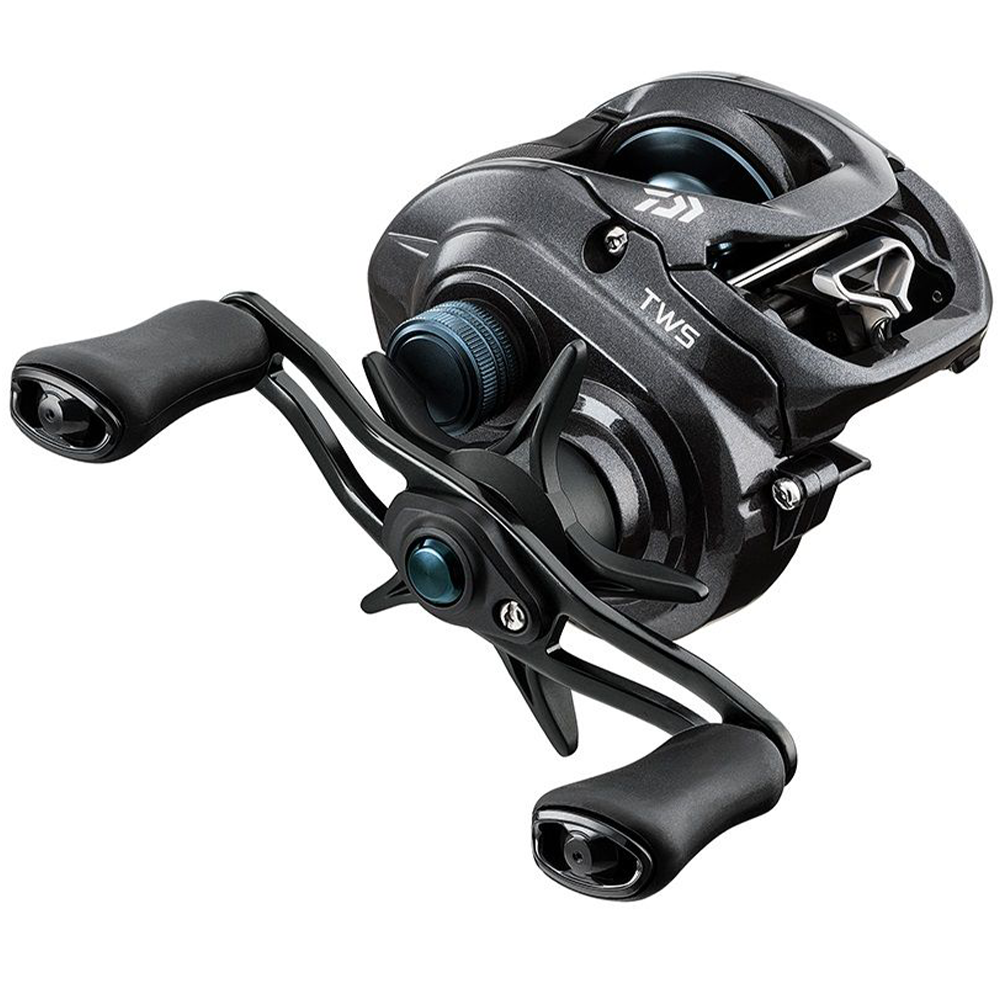
Image credit: Thorne Bros / Daiwa
5. Lew’s KVD Elite: Best Baitcasting Reel Under About $180
Not everyone wants to spend $300 or $400 on a reel.
And that’s exactly why the Lew’s KVD Elite deserves a place on this list.
The current KVD Elite features Lew’s PARAMAG RX Braking System and a seven-bearing system with stainless steel double-shielded bearings. Retail listings in 2026 place the reel around the upper-$100 range, depending on retailer and configuration.
For anglers who want dependable casting control and a familiar low-profile shape without stepping into flagship pricing, it makes a lot of sense.
Recent owner and tester discussions also continue to emphasize backlash control and casting behavior as the real dividing lines between good and mediocre baitcasters.

Image credit: Sportsman’s Warehouse / Lew’s
6. Shimano Metanium MGL B: Best Premium Baitcasting Reel
Now we’re entering the “Wow, that’s light” category.
The Shimano Metanium MGL B is a premium reel aimed at anglers who care deeply about refinement. The current 150-size models are listed by Shimano at 6.3 ounces for the standard-speed versions, with an 8.1:1 XG version at 6.5 ounces.
Shimano uses a Magnesium CoreSolid body, MGL Spool III, SVS Infinity braking, MicroModule gearing, Cross Carbon Drag, and SilentTune technology.
What does all of that mean on the water?
It means the reel is built to feel crisp, light, rigid, and smooth. For someone who fishes all day and notices every little bit of vibration or weight, that can be worth paying for.
For everyone else, a less expensive reel may be the better financial decision.
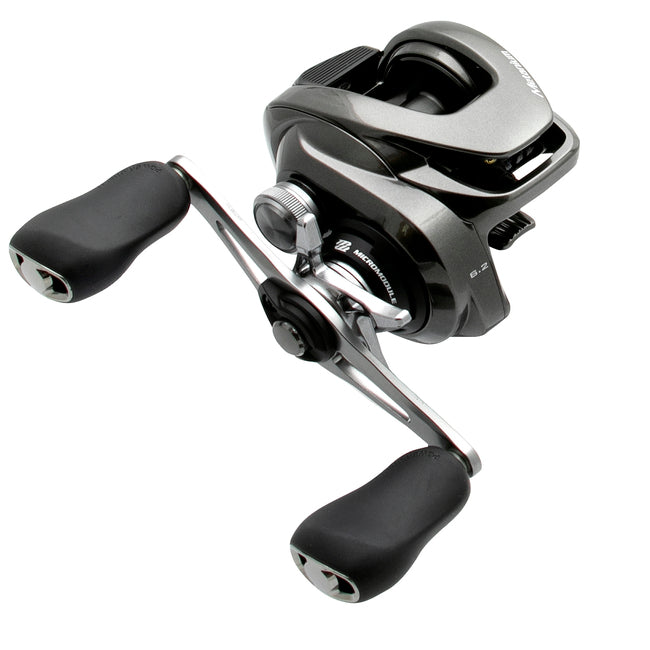
Image credit: Scottsboro Tackle Co. / Shimano
7. Abu Garcia Revo Beast: Best Baitcasting Reel for Heavy Cover
If your favorite sentence is, “I think I can pull him out of there,” look closely at the Abu Garcia Revo Beast.
This reel is designed around heavier presentations and hard-pulling fish. The Revo Beast platform uses an X-Craftic alloy frame and sideplates, a Power Stack Carbon Matrix Drag System, brass gearing, an extended power handle, and a stronger spool and braking setup aimed at bigger applications.
It is a much better fit for anglers fishing heavy cover, larger soft plastics, frogs, swimbaits, and other setups where brute force matters.
Just don’t confuse “heavy-duty” with “best for everything.” A larger power reel can feel excessive when you’re throwing tiny lures all day.
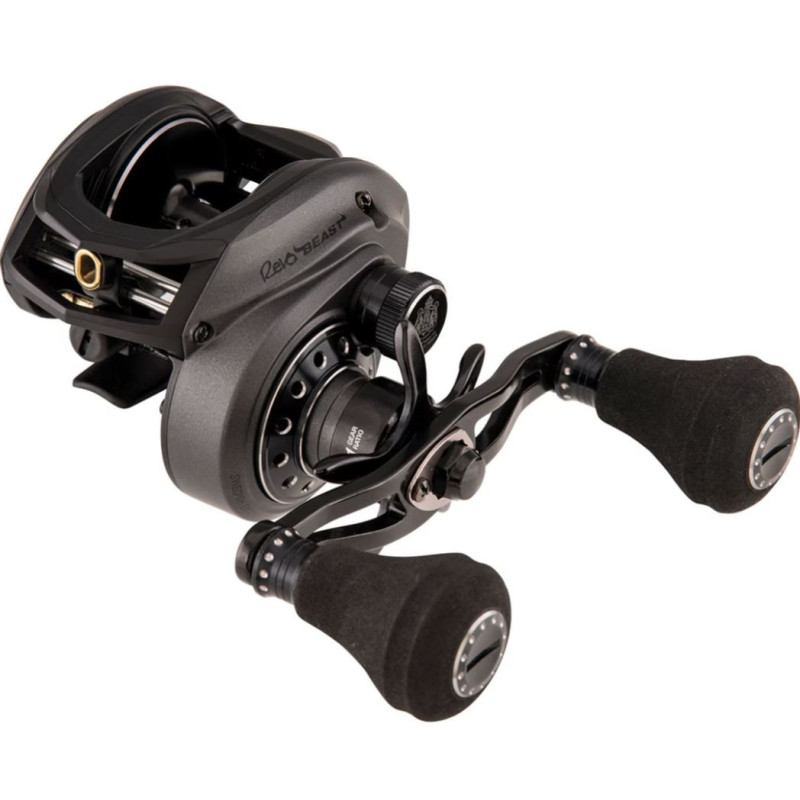
Image credit: Miekofishing / Abu Garcia
8. KastKing Royale Legend Glory: Best Budget Baitcasting Reel
The KastKing Royale Legend Glory is proof that budget baitcasters no longer have to look like they came from the “mystery reel” section of a garage sale.
KastKing currently lists the Glory at a very aggressive price point, with a compact graphite construction, a 39 mm frame height, and a weight around 6.98 ounces. The current listing also offers different gear-ratio options and right- or left-hand retrieve.
For beginners or anglers building several rods without spending premium money on every reel, that is attractive.
The trade-off is feel and refinement. A more affordable reel may not have the same rigid, polished feel as a high-end Shimano or Daiwa.
But does every fishing trip need laboratory-level smoothness?
Probably not.

Image credit: KastKing
9. Shimano Tranx 200: Best Baitcaster for Inshore Saltwater and Power
The Shimano Tranx 200 is a useful choice for anglers who want a low-profile reel capable of handling both freshwater and inshore saltwater applications.
The Tranx line emphasizes cranking power and corrosion-conscious construction. Product information for the 200-series highlights Shimano’s CoreProtect approach, S-ARB shielded bearings, a Hagane body, and a waterproof drag design.
That makes it a better match for anglers who want a powerful reel that can move between bass fishing and tougher inshore applications.
And yes, rinse it after saltwater use. Even the toughest reel appreciates a freshwater shower.

Image credit: Fishing Online / Shimano
10. Piscifun Torrent: Best Low-Cost Alternative
The Piscifun Torrent has been around for years, but its combination of price and useful features keeps it relevant.
The current Torrent concept is built around magnetic braking, aluminum spool construction, a 7.1:1 gear ratio in the common version, and an 18-pound-class carbon drag system. Piscifun’s original launch information also highlighted a longer handle and brass gearing.
This is exactly the sort of reel that appeals to someone who wants to try baitcasting without immediately spending premium money.
It is also a good reminder that specifications aren’t everything. A $50 reel that fits your hand and is set up correctly can catch more fish than a $500 reel that sits in the garage because you’re afraid to scratch it.

Image credit: GoSupps / Piscifun
How to Choose the Best Baitcasting Reel for Your Fishing Style
Now that you’ve seen the top picks, let’s make the decision easier.
For Bass Fishing
A 100- or 150-size reel is the sweet spot for many bass anglers. You get a good balance of line capacity, weight, and versatility.
The Shimano Curado 150M, Daiwa Tatula SV TW 100, and Lew’s KVD Elite are especially compelling choices.
For a different approach to bass preparation, the Stories of Water fish finder guide can help you pair the right reel with better underwater information.
For Beginners
Start with the brakes, not the logo.
A reel with forgiving braking can make the learning process dramatically less frustrating. That’s why the Curado DC 150A is such an appealing choice for someone learning baitcasting in 2026.
And don’t skip practice. The guide to casting farther is useful even if you’ve been fishing for years.
For Heavy Cover
Look for rigidity, strong gearing, a useful drag system, and a handle that gives you leverage.
This is where the Abu Garcia Revo Beast shines.
For Lighter Lures
Spool inertia becomes increasingly important as lure weight drops. A lightweight spool can make it easier to get the spool moving with lighter presentations.
The Shimano Curado 150M, Metanium MGL B, and appropriate Daiwa SV setups all deserve attention here.
For Saltwater
Do not assume every freshwater baitcaster is ready for regular saltwater exposure.
Look for corrosion-conscious materials, sealed or shielded components where appropriate, and a maintenance routine you will actually follow.
The Tranx family is one of the more natural choices for this job.
Gear Ratio: What Should You Actually Buy?
The old guide was right to focus on gear ratio, but the 2026 version of this conversation is slightly more practical.
Instead of obsessing over one perfect number, think about what you are trying to do with the lure.
- 6.2:1 to 6.4:1: useful for steady presentations and techniques where you don’t need lightning-fast pickup.
- 7.1:1 to 7.4:1: the everyday all-rounder zone for many anglers.
- 8.1:1 and higher: useful when you want fast line pickup, quick repositioning, or faster presentations.
Don’t forget that line diameter, spool fill, lure type, and how aggressively you turn the handle all affect real-world retrieval speed.
Braking Systems: Centrifugal, Magnetic, or Digital?
Centrifugal Brakes
Centrifugal systems can provide excellent spool control, particularly during the early part of the cast when the spool is spinning rapidly.
Magnetic Brakes
Magnetic systems are often convenient because external adjustment is quick and easy. Daiwa’s Magforce family is a famous example.
Digital Braking
Digital systems such as Shimano DC add electronics to the braking process. The latest Curado DC 150A is a clear example, with Shimano stating that its IDC4 system monitors spool speed 1,000 times per second.
Which one is best?
The one that gives you the amount of control you need without making casting feel over-braked.
How Many Bearings Does a Good Baitcaster Need?
This is one of those numbers that looks fantastic on a product box.
“11+1 bearings!”
Sounds impressive.
But bearing count alone does not determine how smooth a reel is.
Quality, placement, alignment, gear design, lubrication, spool construction, and tolerances all matter.
I’d rather have a reel with fewer well-placed bearings and excellent gearing than a reel covered in bearings like a fishing-themed Christmas tree.
Aluminum, Magnesium, or Graphite Frame?
This is another major decision.
Aluminum generally gives you strong rigidity and a reassuring feel under load.
Magnesium can deliver excellent strength-to-weight performance, but premium materials and saltwater considerations make it more specialized.
Graphite or composite bodies can keep cost and weight down, which is perfectly reasonable for many recreational anglers.
The right frame depends on how hard you push the reel.
What Size Baitcaster Should You Buy?
For general bass and freshwater fishing, the 100- to 150-size class is usually the easiest place to start.
Smaller reels tend to palm nicely and feel quick.
Larger reels can offer more line capacity and power for bigger lures and stronger fish.
For trophy-class targets, swimbaits, muskies, or other heavy applications, stepping up in size can make sense. But don’t automatically buy the largest reel in the store simply because it looks impressive sitting beside the cash register.
For species-specific preparation, you can also explore the Stories of Water guides for carp fishing and grass carp fishing.
How to Prevent Backlash With a Baitcaster
Backlash happens when the spool is rotating faster than line is leaving it.
The result?
Congratulations. You have manufactured a bird’s nest.
Fortunately, the solution is a combination of settings and technique.
- Set your spool tension correctly.
- Start with stronger brake settings.
- Use a lure weight appropriate for the rod and reel.
- Use your thumb to control the spool during the cast.
- Reduce brake settings gradually as your confidence improves.
And don’t try to learn with a tiny, featherweight lure and a 30-mile-per-hour crosswind. Give yourself a fighting chance.
How to Pair a Baitcasting Reel With the Right Rod
A great reel can still feel awful on the wrong rod.
For many bass applications, a medium-heavy casting rod in the roughly 7-foot range makes a sensible all-purpose partner, but your exact rod should match the lure weights and techniques you use most.
Pay attention to the rod’s lure rating.
If your lure falls outside that range, casting can become awkward and less efficient.
Then check balance.
Hold the complete rod-and-reel setup in your hand. If the tip constantly wants to drop toward the floor, you may not have the most comfortable combination.
Don’t Forget Line
The original Stories of Water article also discussed spool size and line selection, and that advice is still relevant.
Your reel, line, rod, and lure should work as a team.
For many bass techniques, anglers commonly mix monofilament, fluorocarbon, and braid depending on cover and presentation.
Thicker line takes more spool space and can influence casting. Lighter line can improve casting distance but may not provide the abrasion resistance or strength you need around heavy cover.
It’s all a balancing act.
Think of the reel as one piece of the puzzle—not the entire picture.
How to Maintain a Baitcasting Reel
Even the best baitcasting reel needs basic care.
Keep it clean.
Don’t let dirt and old grease accumulate.
Use the manufacturer’s recommended maintenance procedure and lubricants rather than treating the reel like a bicycle chain.
After saltwater use, follow the manufacturer’s cleaning recommendations and don’t leave the reel wet in a closed tackle bag.
For general fishing preparation, the Stories of Water shrimp-hooking guide and mullet fishing guide are also useful additions to your tackle routine.
Are Cheap Baitcasting Reels Any Good in 2026?
Yes.
But there is a difference between cheap and good value.
A low-cost reel can be perfectly useful if its frame is decent, the spool is consistent, the brakes work properly, and the gears are reasonably smooth.
The problem begins when cost cutting affects alignment, durability, tolerances, or long-term consistency.
That’s why a budget model from an established brand can be a safer bet than the cheapest anonymous reel you can find online.
The Piscifun Torrent and KastKing Royale Legend families are examples of low-cost reels that remain relevant because they offer more than bare-bones functionality.
What Is the Best Baitcasting Reel Brand?
That’s the argument that has probably ruined more fishing lunches than lost fish.
Shimano
Excellent choice if you value refined gearing, rigid construction, advanced spool design, and systems such as DC braking.
Daiwa
Especially appealing if you like magnetic braking, SV spool technology, compact reels, and the T-Wing System.
Abu Garcia
A strong choice when you want power, distinctive reel designs, and a wide range from affordable to specialized heavy-duty models.
Lew’s
Worth considering for anglers who want comfortable low-profile reels and strong value in the mid-range market.
The important thing is not choosing the “best brand.” It’s choosing the best platform for your fishing style.
The Biggest Baitcasting Reel Buying Mistakes
- Buying the fastest gear ratio for everything: Speed isn’t automatically better.
- Ignoring ergonomics: A reel that feels uncomfortable after 200 casts will not become more comfortable because it has a fancy logo.
- Choosing bearing count over overall quality: More isn’t automatically better.
- Ignoring brake adjustment: Learn how your reel controls the spool.
- Overbuying: A $500 reel cannot compensate for poor casting technique or a bad fishing spot.
What Reel Should You Actually Buy?
Here’s the simplest way to narrow it down.
Choose the Shimano Curado 150M if you want a versatile, proven all-purpose bass reel.
Choose the Curado DC 150A if backlash control and easy casting are major priorities.
Choose the Daiwa Tatula SV TW 100 if you like Daiwa’s braking and compact casting feel.
Choose the Tatula CT if you want something smaller and highly palmable.
Choose the Lew’s KVD Elite if you want a strong mid-priced option.
Choose the Shimano Metanium MGL B if premium weight and refinement matter more than price.
Choose the Abu Garcia Revo Beast for serious power fishing.
Choose the KastKing Royale Legend Glory if keeping the budget low is the priority.
Choose the Shimano Tranx 200 if saltwater and heavier inshore work are part of the plan.
Choose the Piscifun Torrent if you want to experiment with baitcasting without spending a lot.
Final Verdict: The Best Baitcasting Reels in 2026
The best baitcasting reel in 2026 isn’t necessarily the newest, most expensive, or most technically complicated model.
It’s the one that matches your fishing.
For most bass anglers, the Shimano Curado 150M is our best overall recommendation because it hits a very useful middle ground between weight, durability, casting performance, gear options, and price.
The Daiwa Tatula SV TW 100 is a fantastic alternative for anglers who love Daiwa’s approach to braking and casting.
The Shimano Curado DC 150A is the standout for anglers who want modern digital braking and a forgiving learning curve.
For premium shoppers, the Shimano Metanium MGL B is in another league.
For heavy cover, Abu Garcia Revo Beast makes far more sense than a tiny finesse reel.
And for anglers watching every dollar, the KastKing Royale Legend Glory and Piscifun Torrent show just how accessible baitcasting has become.
One final piece of advice: don’t let a specification sheet do all your thinking.
Cast the reel if you can.
Hold it.
Feel the handle.
Try the brake adjustment.
Imagine making 300 casts with it.
Because the right baitcaster should make fishing feel easier—not make you wonder why you bought another expensive object that now lives in the garage.
And once the reel feels right, get back on the water. The fish are unlikely to care how many bearings you have.