Video credit: Ramon Outdoors
What is the best bait for bluegill?
Ask five anglers and you could easily get five answers. One swears by worms. Another won’t leave home without crickets. Someone else reaches for tiny jigs, while the old-school angler calmly pulls a piece of bread from a sandwich bag and starts catching fish.
And here’s the funny part: all of them can be right.
Bluegill are opportunistic feeders, which means they will eat a wide variety of insects, larvae and other small food sources. That is why the best bluegill bait can change with the season, water conditions, location and even the mood of the fish.
The original Stories of Water article focused on artificial choices such as the Rapala Rattlin, Berkley Gulp, Yamamoto Senko, Rose Kuli Multi-Jointed Bait and an A-SZCXTOP popper. Those recommendations are still interesting, but a modern 2026 bluegill fishing strategy should also put live worms, crickets, tiny jigs, micro soft plastics and flies near the top of the list.
So, let’s settle the bait-box argument.

Image credit: Amazon / Rapala; image originally used in the Stories of Water guide
What Is the Best Bait for Bluegill?
For pure reliability, a small piece of live worm under a bobber is extremely difficult to beat. Live crickets are another excellent choice, especially when bluegill are feeding around shallow vegetation or near the surface.
Natural bait works so well because it looks, smells and moves like something bluegill already expect to eat.
That gives us a simple starting point:
- Best all-around bait: small worm or nightcrawler piece
- Best warm-weather bait: live cricket
- Best small natural bait: red wiggler or small insect bait
- Best artificial option: tiny jig, grub or micro soft plastic
- Best surface option: tiny popper
The real trick is not finding one magical bait. It is knowing when to change.
Why Are Bluegill Such Fun Fish to Catch?
Bluegill are one of the best fish for beginners because they are common in many lakes, ponds, canals and slow-moving waters. They also have a reputation for being willing to investigate a bait that looks remotely edible.
They’re also wonderfully entertaining.
First comes the excitement.
The bobber twitches.
You wait.
It disappears.
You set the hook.
And somehow a fish that fits comfortably in your hand feels like you just won a professional tournament.
That’s the magic of bluegill fishing.

Image credit: A-Z Animals / iStock
1. Live Worms: The Classic Bluegill Bait That Still Wins
Let’s begin with the bait that has probably caught more bluegill than all the fancy lure names combined: the humble worm.
Earthworms, red wigglers and pieces of nightcrawler are excellent because they offer natural movement and a familiar food profile.
The biggest mistake is using too much worm.
Bluegill have relatively small mouths. If you put a huge chunk of nightcrawler on a tiny hook, the fish may spend all afternoon nibbling the free end while completely avoiding the hook point.
Use a small section instead. In many situations, an inch or two is enough, and sometimes even less works better.
Best Worm Rig for Bluegill
Try a small hook, light line, a tiny split shot and a small bobber. Adjust the depth according to where the fish are holding.
In spring and summer, start shallow around weeds, docks, brush and other cover. If you’re not getting bites, lower the bait deeper in small increments.
For more help with fishing conditions, check the Stories of Water guide on the best time to go fishing.
2. Live Crickets: The Bluegill Summer Favorite
If worms are the dependable family sedan of fishing bait, crickets are the sports car.
Bluegill naturally feed on insects, so a lively cricket can be an irresistible target.
This is especially fun when fish are feeding near the surface.
Hook the cricket carefully so it stays active. Then place it under a small float near grass, reeds, dock edges or other likely cover.
Don’t overwork it.
Let the cricket move naturally.
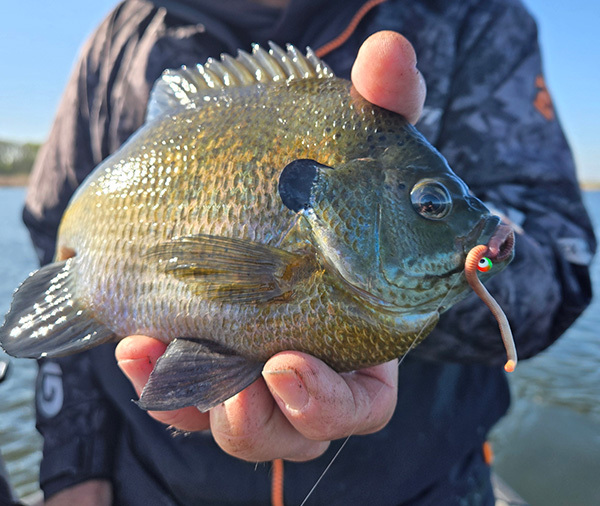
Image credit: Custom Jigs & Spins
That fish is a good reminder that tiny presentations can produce surprisingly impressive bluegill.
3. Red Wigglers: A Fantastic Small Bait
Red wigglers are often easier to manage than a large nightcrawler because they’re smaller and naturally suited to panfish-sized hooks.
For beginners, that simplicity is a major plus.
Pinch off a small section, hook it lightly and keep the hook point exposed.
Fish around cover and don’t be afraid to experiment with depth.
A red wiggler can be particularly effective when bluegill are actively feeding but seem unwilling to commit to a larger bait.
The proper fishing rod casting guide can help when you need to place a tiny bait accurately around docks, grass or brush.
4. Waxworms and Other Tiny Insect Baits
Sometimes bluegill want something even smaller.
Waxworms, mealworms and similar insect-style baits can be excellent choices when the fish are being picky.
The secret is matching the meal to the mouth.
Bluegill do not need a giant meal. They need something that looks like an easy snack.
That makes these small baits particularly useful for anglers fishing with very light tackle or targeting smaller fish.
5. Bread and Corn: Simple Baits That Can Surprise You
There are days when expensive lures get ignored while a tiny piece of ordinary food produces a bite.
Small bits of bread or corn can work in certain ponds and fisheries, particularly where fish are accustomed to seeing these foods.
But always check local fishing rules before using any bait or chum. Regulations vary by location.
Use very small portions and make sure the bait stays securely on the hook.
For anglers who use other types of live bait, the Stories of Water minnow-keeping guide offers useful preparation tips.
6. Tiny Jigs: One of the Best Artificial Baits for Bluegill
Want to stop carrying a cup of worms around?
Try tiny jigs.
Small jigs are excellent for covering water, searching different depths and fishing actively.
They can be tipped with small soft plastics, feathers, marabou or other materials.
Use ultralight tackle and a light jig. Cast past cover, let it sink briefly and retrieve it slowly with tiny lifts and pauses.
Don’t make it look like you’re racing the lure back to shore.
Bluegill often prefer an easy target.
It’s less “Olympic sprint” and more “small snack floating awkwardly through the water.”
7. Small Soft Plastics: Reusable Bluegill Bait
The original Stories of Water article highlighted Berkley Gulp worms and Yamamoto Senko as artificial bait choices.
The concept is still useful, but scale matters.

Image credit: Amazon / Berkley; image originally used in the Stories of Water guide
Scented soft plastics can combine some of the convenience of artificial lures with a more natural food profile.
For bluegill, however, avoid oversized versions.
Trim the lure if necessary.
Use a tiny hook.
Keep the profile compact.
For more light-tackle ideas, check out the Stories of Water baitcasting reel guide.
8. Tiny Poppers: The Most Exciting Bluegill Bait
Want to actually watch the fish strike?
Try a tiny popper.
Few things in fishing are more satisfying than seeing a bluegill rise from below and smash a lure on the surface.
Use short twitches followed by pauses.
That pause is important.
Cast.
Let it sit.
Twitch.
Wait.
Bluegill may strike when the lure appears to be doing absolutely nothing.

Image credit: Amazon; image originally used in the Stories of Water guide
The original Stories of Water article highlighted the A-SZCXTOP popper for its bright colors and surface action. The broader lesson still holds: small topwater lures can make ordinary bluegill fishing remarkably exciting.
9. Small Spinners and Spoons
If you’re not sure where the bluegill are, small spinners and spoons can help you locate them.
They provide flash and vibration, allowing you to cover water much faster than a stationary bait.
Keep the lure small and the retrieve controlled.
A slow, steady retrieve is a great starting point. If that doesn’t work, experiment with short pauses and speed changes.
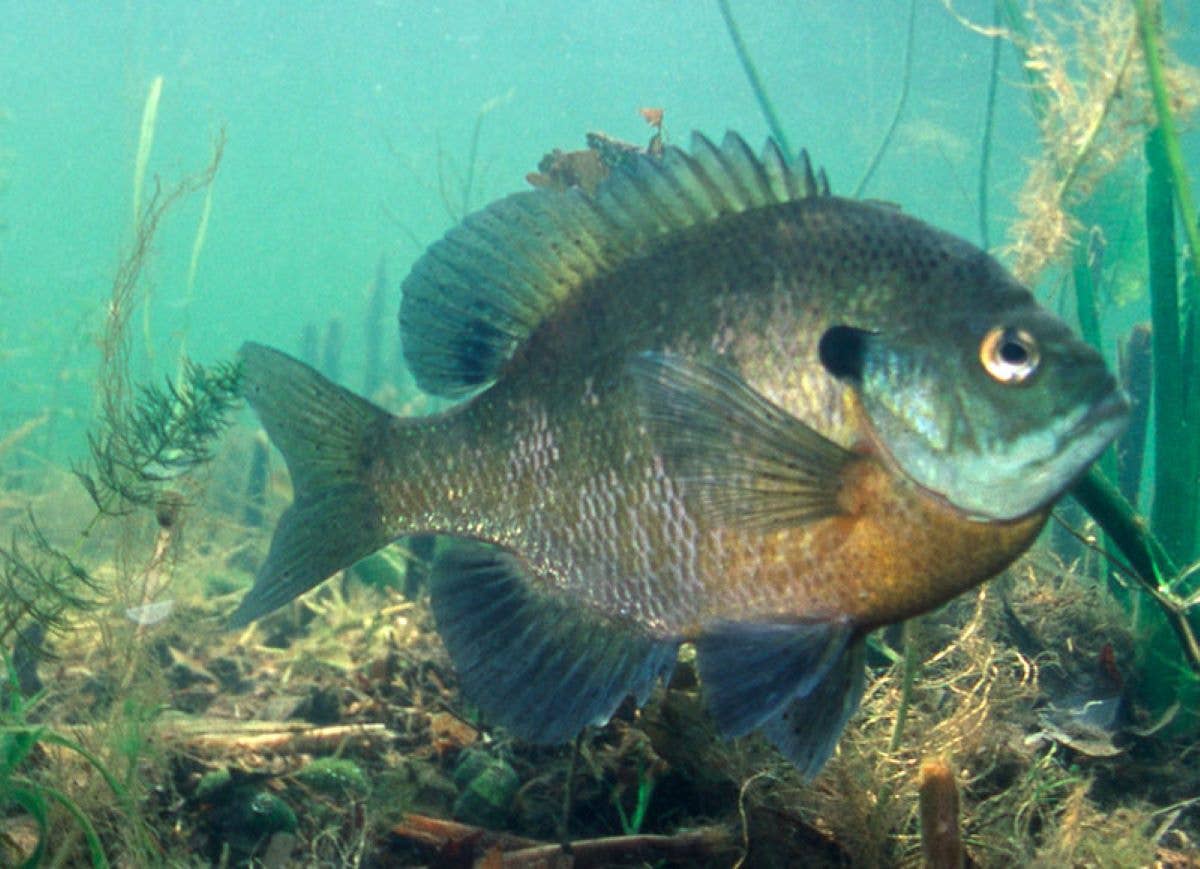
Image credit: Minnesota Department of Natural Resources via Bring Me The News
10. Tiny Flies for Surface-Feeding Bluegill
Bluegill are fantastic targets for fly anglers because they often feed on small insects and other tiny prey.
Small dry flies, nymphs and insect patterns can all work depending on the conditions.
When fish are feeding near the surface, watching a bluegill slowly rise toward a fly is half the fun.
Then the second half arrives when the fly disappears.
Natural Bait vs Artificial Lures: Which Is Better?
There is no universal winner.
Natural bait is generally the easiest starting point for beginners. Worms and crickets are familiar foods and require little technique.
Artificial lures are more convenient when you want to cast repeatedly, search large areas or avoid maintaining live bait.
The original Stories of Water article focused more heavily on artificial baits, and that remains useful for anglers who prefer lure fishing.
But for a beginner who simply wants to catch bluegill, I’d start with a worm.
It is hard to make fishing more complicated than necessary.
The Best Bluegill Rig for Beginners
Want the simplest possible setup?
- Ultralight or light spinning rod
- Light monofilament or similar line
- Small hook
- Small split shot
- Small bobber
- Worm or cricket
Adjust the float depth until you find the fish.
Start shallow around cover and gradually fish deeper if necessary.
And keep your rig light.
Bluegill don’t need heavy equipment.
In fact, light tackle makes them much more fun.
How Deep Should You Fish for Bluegill?
Bluegill may be found at different depths depending on season, temperature, food and cover.
During warmer months, shallow water around vegetation, docks and spawning areas can be highly productive.
During other conditions, fish may move deeper or suspend.
A good rule is to start shallow and adjust.
Try a few feet.
If nothing happens, lower the bait.
Then lower it again.
Eventually the bobber tells you what the fish are thinking.
It’s like knocking on doors in an underwater apartment building.
Where Do Bluegill Hide?
Bluegill often gather around cover because it offers food, shade and protection.
Look around:
- Weed beds
- Brush piles
- Fallen trees
- Dock pilings
- Rocky banks
- Shallow flats
- Spawning areas
- Creek mouths and current
Don’t automatically cast into the deepest water you can see.
Sometimes the fish are sitting two feet away from the bank.
What Is the Best Time of Day to Fish for Bluegill?
Bluegill can bite throughout the day, especially when conditions are favorable.
However, early morning and evening are often excellent periods because the light is softer and fish may become more willing to move into shallow water.
During extremely hot summer afternoons, look for shade and deeper water.
In spring, water temperature may influence bluegill movement more than the clock itself.
The Stories of Water guide on choosing the best fishing time goes into more detail about seasonal patterns and weather.
How to Catch Bigger Bluegill
Eventually, the question becomes:
How do I stop catching tiny bluegill every five seconds?
Start by changing location.
Larger fish may hold around deeper edges, isolated cover or more productive structure.
Try different depths.
Try slightly larger—but still reasonable—baits.
And don’t stay in one place forever.
If you’ve caught ten tiny bluegill from the same spot, the big ones may be somewhere else.
Or they may be there, but they’re sitting six feet deeper and laughing at you.
What Size Hook Should You Use for Bluegill?
Small hooks are generally the way to go.
Size 6 to 10 is a useful range for many bluegill setups, depending on bait and local regulations.
The important thing is to match hook size to the bait and fish size.
Long-shank hooks can also make removing the hook easier, especially when a fish takes the bait deeply.
Carry a small pair of forceps or fishing pliers. They weigh almost nothing and can save a lot of frustration.
How to Rig a Worm for Bluegill
Cut a small section of worm.
Thread it lightly onto the hook.
Keep the hook point exposed.
Add a small split shot if necessary.
Then suspend the bait under a small bobber.
Start around two feet deep.
Watch the float.
If the fish are not there, change the depth.
If they’re stealing the worm without getting hooked, make the bait smaller and check that your hook point remains exposed.
Why Are Bluegill Stealing My Bait?
Because bluegill are tiny bait thieves.
More seriously, bait stealing can mean the bait is too large for the fish or the hook isn’t matched correctly.
Try:
- Using less bait.
- Using a smaller hook.
- Keeping the hook point exposed.
- Changing the depth.
- Moving closer to cover.
Sometimes the solution is surprisingly simple: use less bait.
Can Bluegill Eat Surprisingly Large Lures?
They can certainly attack objects that look ridiculous for their size.
But if your goal is consistent bluegill fishing, tiny presentations remain the better bet.
A bluegill may attack a lure simply because it is moving, but a lure that closely matches the size of its usual prey will generally be easier for it to handle.
What Is the Best Bluegill Bait in Spring?
Start with worms or small insect baits.
As water warms, try shallow areas around vegetation and spawning habitat.
If the fish are active, switch to tiny jigs or spinners so you can cover water.
Spring is also a good season to test different depths because bluegill movement can change quickly as the water warms.
What Is the Best Bluegill Bait in Summer?
Crickets and worms are excellent summer choices.
Small poppers and jigs can also be fantastic, particularly early and late in the day.
During bright, hot afternoons, look for shade, deeper edges and vegetation.
Don’t assume the fish are gone just because they aren’t biting in the exact spot where you caught them yesterday.
What Is the Best Bluegill Bait in Fall?
Fall is a good season for small artificial lures because cooler water can encourage fish to move and feed differently.
Worms remain reliable.
Small jigs and spinners are useful when searching for fish.
As temperatures drop, pay more attention to water temperature and less attention to the clock.
What Is the Best Bluegill Bait in Winter?
Winter bluegill fishing can be slower, but it is still possible.
Use tiny baits.
Fish slowly.
Experiment with deeper areas and more stable water temperatures.
Sometimes a presentation that barely moves is the one that gets eaten.
Can You Use Minnows for Bluegill?
Small minnows can catch bluegill, but they are generally not the first bait I’d choose when bluegill are the specific target.
Worms, crickets and tiny artificial presentations are usually easier to match to their size and diet.
For more live-bait information, check the Stories of Water guide to keeping minnows alive.
How Weather Changes the Best Bluegill Bait
Weather can influence bait choice and presentation.
Bright sunlight may encourage more subtle presentations around shade and deeper cover.
Cloudy skies can make active lures more attractive.
Light rain can introduce insects and other food into the water.
Wind can push food and plankton toward shorelines, which may attract baitfish and bluegill.
The important thing is to watch the environment rather than blindly repeating yesterday’s technique.
Can a Fish Finder Help You Catch Bluegill?
Absolutely.
On larger lakes, a fish finder can help locate depth changes, vegetation, structure and suspended fish.
This is especially useful when bluegill are scattered.
Check the Stories of Water fish finder guide for a modern look at sonar and GPS technology.
But don’t forget the obvious clues.
Watch birds.
Watch insects.
Watch the shoreline.
Watch where other anglers are catching fish.
Sometimes the water itself gives away the answer.
Natural Bait or Artificial Lures: Which Should You Carry?
Why choose one?
Carry both.
A small container of worms gives you a reliable starting point.
A handful of jigs and tiny soft plastics gives you the ability to search.
A tiny popper gives you the chance for a spectacular topwater strike.
That combination covers most situations without requiring a tackle box the size of a suitcase.
Build a Simple Bluegill Tackle Box
You don’t need hundreds of lures.
A practical bluegill tackle box can contain:
- Small hooks
- Small bobbers
- Split shot
- Worms or red wigglers
- Crickets
- Tiny jigs
- Small soft plastics
- One or two poppers
- Small forceps or pliers
That’s enough to keep a day of bluegill fishing interesting.
For anglers building a more advanced setup, the Stories of Water baitcasting reel guide can help with heavier casting equipment, although ultralight spinning tackle is often the easiest choice for panfish.
How to Handle Bluegill Carefully
If you’re practicing catch and release, handle the fish gently.
Wet your hands before touching the fish when possible, avoid squeezing it tightly, and keep it out of the water only as long as necessary.
If the hook is deeply embedded, use appropriate tools and take care not to cause unnecessary injury.
A small fish deserves careful handling too.
Check Fishing Regulations Before Using Bait
Always check your local rules before fishing.
Regulations can cover bait species, collection methods, chumming, seasons, catch limits and more.
Even a technique that is completely normal in one lake can be restricted in another.
A quick check with your state or local fisheries agency is worth the few minutes.
What Is the Best Bluegill Bait for Kids?
Keep it simple.
A small worm under a bobber is hard to beat.
Kids can see the float.
They can learn to wait.
Then the float disappears and the excitement begins.
That makes bluegill fishing a great way to introduce young anglers to patience, casting, bait handling and fish care.
And let’s be honest: if the bobber goes under, nobody complains about “advanced strategy.”
How to Catch Bluegill From Shore
Shore fishing can be incredibly productive because you don’t need a boat to locate bluegill.
Start around visible cover.
Cast parallel to the bank.
Fish under docks, beside vegetation and near shaded areas.
Change depth before completely changing location.
If nothing happens after several adjustments, move.
Bluegill are often nearby, but “nearby” can mean five yards or fifty yards depending on the water.
How to Catch Bluegill From a Boat
A boat gives you an enormous advantage: you can search.
Use your electronics to identify productive depths and structure.
Then test a bait at different depths.
If you find a school, mark the location.
Keep your presentation light.
Once the fish scatter, move and search again.
The trick is not simply finding one bluegill.
It is finding the pattern.
What Is the Best Bluegill Bait Overall in 2026?
After combining the original Stories of Water recommendations with modern fishing tactics, the best all-around choice remains beautifully simple:
Start with a small piece of live worm under a bobber.
If the fish are feeding on insects, switch to a cricket.
If you want to cover water, use a tiny jig or spinner.
If the fish are feeding on the surface, throw a small popper.
If they’re being picky, downsize.
If nothing is happening, change depth.
And if the fish still refuse to cooperate, move.
That is a much better strategy than waiting in one spot for three hours because someone on the internet said that exact location is “money.”
Final Verdict: The Best Bait for Bluegill
The best bait for bluegill in 2026 is not one secret lure hidden in a mysterious tackle box.
For beginners and pure reliability, worms remain the king.
For warm-weather fishing, crickets are hard to beat.
For active lure fishing, tiny jigs, spinners and soft plastics offer excellent versatility.
For the most exciting visual strikes, tiny poppers are tough to top.
The biggest lesson is simple: think small, stay flexible, and pay attention to where the fish are actually feeding.
Bluegill do not care how expensive your tackle is.
They care whether your bait looks like food.
That’s why a simple worm can outfish a tackle box filled with expensive lures.
And that is exactly what makes bluegill fishing so much fun.
You don’t need a massive boat.
You don’t need twenty rods.
You don’t need enough electronics to operate a submarine.
You need a light rod, a small bait, a little patience and a willingness to experiment.
Then watch the bobber.
When it goes down, set the hook.
And enjoy one of the simplest pleasures fishing has to offer.
Small bait. Small fish. Big smiles.